


Be Wellness™
Be Sexy Japanese Marine Collagen
Be Sexy Japanese Marine Collagen
WHAT IT DOES
Couldn't load pickup availability

Order in 5h 41m · Ships today
Free delivery across India on orders over ₹1,899

Free gift on every order over ₹1,899
Added to your bag automatically at checkout.

319 Be. Iconic Points
Redeem points against future orders. Members save 10% more.
 Licensed
 Certified
 Verified
 Gluten Free


Why this exists
Why this exists
After 25, your body makes a little less collagen every year.
Most people only notice it in the mirror. Fine lines deepen, skin loses its bounce, the dewy look starts to fade. But collagen does not just live in skin. It is also the protein your tendons, ligaments, and the structure around your joints are built from. That same slow decline shows up there too, in stiffness after sitting too long, joints that ache when the weather turns, a body that takes longer to feel mobile in the morning.
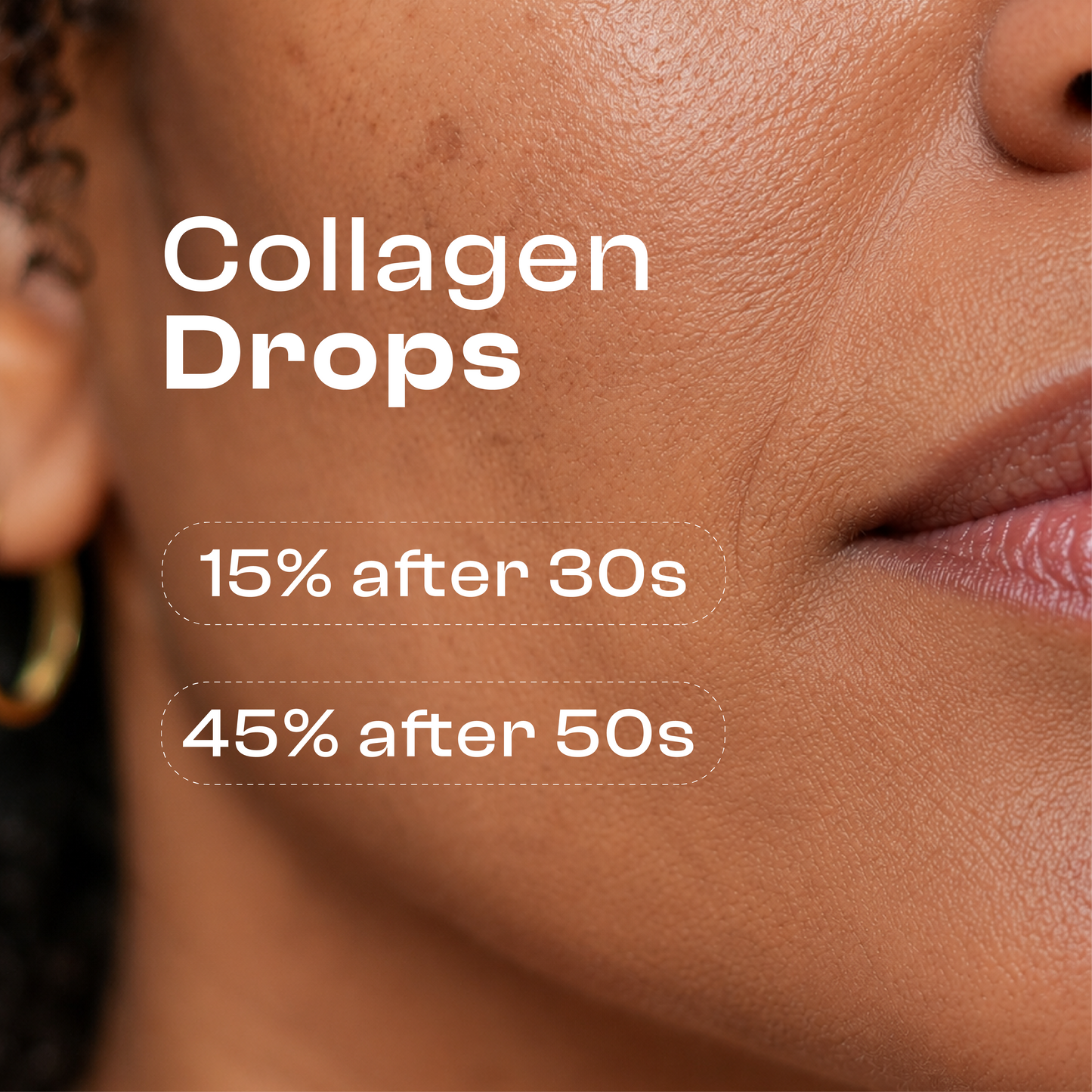
By 40, you have lost about a quarter of your body's collagen. By 50, closer to half. The reason is biology, not effort. And it shows up in both places at once: in how your skin looks, and in how your body moves.
This is built for both. 8.44 g of Japanese marine collagen (Type I and III), at a clinical dose, with the cofactors your body actually needs to use it. Hyaluronic acid for both dewy skin and cushioned joints. Astaxanthin for both UV protection and active-joint recovery. Vitamin C as the cofactor for collagen synthesis across every tissue, not just skin. One serving a day. The full picture of how collagen works in a body, not just on a face.
Description
Description
Be Wellness Japanese Marine Collagen is a clinical-dose collagen supplement built for the way collagen actually works in a body: in skin, in joints, and in the connective tissue between them. Eight actives in one scoop: 8.44 g of low-molecular-weight Japanese marine collagen peptides (Type I and III) to support tissue rebuilding, 200 mg of sodium hyaluronate to hydrate skin and cushion joints, 12 mg of astaxanthin to protect skin and support joint recovery, 500 mg of glutathione with vitamin C and acerola cherry for brightness and collagen synthesis, and Sesbania-derived biotin to strengthen hair and nails. No proprietary blends, no artificial colours, no rounded-down doses. One serving a day, for 8 to 12 weeks of compounding benefit across skin, joint comfort, and mobility.
Full Ingredient List
Full Ingredient List
How To Use
How To Use
Shipping & Returns
Shipping & Returns


What's inside and why
Japanese Marine Collagen (Type I and III)
Low-MW hydrolysed peptides rebuild. Block 01Japanese Marine Collagen (Type I and III)
Low-MW hydrolysed peptides rebuild. Block 01Sodium Hyaluronate
Oral hyaluronic acid, low-MW hydrate. Block 02Sodium Hyaluronate
Oral hyaluronic acid, low-MW hydrate. Block 02Astaxanthin
Marine carotenoid antioxidant cushion + Protect. Block 03Astaxanthin
Marine carotenoid antioxidant cushion + Protect. Block 03L-Glutathione (Reduced)
Master antioxidant Protect + Brighten. Block 04L-Glutathione (Reduced)
Master antioxidant Protect + Brighten. Block 04Ascorbic Acid (Vitamin C)
Essential cofactor for all collagen tissue synthesis cofactorAscorbic Acid (Vitamin C)
Essential cofactor for all collagen tissue synthesis cofactorAcerola Cherry Extract
Whole-food vitamin C Botanical antioxidantAcerola Cherry Extract
Whole-food vitamin C Botanical antioxidantSesbania Extract (natural biotin)
Plant-derived biotin Strengthen. Block 05Sesbania Extract (natural biotin)
Plant-derived biotin Strengthen. Block 05‘How it works together’ — Synergy
Five blocks. One sachet. A yeast protein engineered like a dairy one.
The architectural insight of this formula is that we treat the leucine gap between yeast and whey as a known engineering problem and solve it directly. The yeast protein supplies the bulk amino acid load (25 g of complete protein with all nine essentials), and the 1 g of free leucine ensures every serving clears the mTOR trigger threshold. This is the step that separates a yeast protein that actually builds muscle from a pea/rice blend that hopes you ingest enough to overcome the gap.
DigeZyme® then plays a uniquely important role here. Yeast cell wall mannans and beta-glucans are non-digestible if not enzymatically broken down. Without DigeZyme®, an estimated 10 to 15 percent of the protein dose would pass through your gut unused. Taurine and magnesium glycinate support recovery in the same way as our whey isolate. Zinc and piperine close the absorption layer, which matters more here than in the dairy version because vegan and vegetarian eaters absorb less zinc from food.
Build, trigger, recover, digest, absorb. The result is a yeast protein that, taken with appropriate resistance training, produces lean mass and strength outcomes comparable to whey isolate. With a tenth of the carbon footprint of dairy, no animal inputs, and a gentle digestive feel that most users notice from the first sachet.
The daily practice
One serve in 200 to 250 ml of water, or juice
Take it on an empty stomach if you can
Pair with movement and skincare
Give it 8 to 12 weeks
What to expect.
The hydration
The comfort
The structure
The complete tissue formula
 Skin + joints + connective tissue
 Usually skin only, or joint only
Japanese marine (wild fish skin), Type I and III
Mostly bovine, or Type I only marine
8.44 g per scoop
Typically 2.5 to 5 g (sub-clinical)
200 mg sodium hyaluronate, low-MW oral
Rarely included
12 mg marine carotenoid
Almost never included
500 mg reduced form
Rarely included
75 mg + 50 mg acerola cherry
Often missing
11 mg Sesbania (plant-derived)
Usually synthetic, often missing
10 mg
Rarely included
None. Every dose disclosed
Common
Yes
Varies
Usually skin only, or joint only
Japanese marine (wild fish skin), Type I and III
Mostly bovine, or Type I only marine
8.44 g per scoop
Typically 2.5 to 5 g (sub-clinical)
200 mg sodium hyaluronate, low-MW oral
Rarely included
12 mg marine carotenoid
Almost never included
500 mg reduced form
Rarely included
75 mg + 50 mg acerola cherry
Often missing
11 mg Sesbania (plant-derived)
Usually synthetic, often missing
10 mg
Rarely included
None. Every dose disclosed
Common
Yes
Varies
Non-Negotiable Standards
Credibility is engineered. We reject industry minimums. Every formulation stands on deliberate logic and absolute scientific accountability.
Research-Backed Ingredients
Full Ingredient Disclosure
Effective Dosages
Certified Manufacturing
Pair it with
your routine

Be 100% Multivitamin
builder and foreman duo for your muscles

Be
On
DND
Sleep
Reset
Energy + endurance for him

Be
Alpha
Testosterone
Booster
builder and foreman duo for your muscles
Questions, answered.
What is the difference between Type I and Type III collagen, and why are both in this formula?
Type I is the dominant collagen in adult skin (around 80% of it) and the major structural protein in tendons, ligaments, and bones. Type III is the second-largest fraction, central to elasticity in both skin and connective tissue. Most marine collagens supply Type I only. This formula contains both Type I and Type III, which together give a more complete profile across skin and the connective tissue around joints.
Does this support joint comfort and cartilage?
It supports joint comfort and the connective tissue around joints. Type I collagen is the dominant structural protein in tendons and ligaments, and sodium hyaluronate at 200 mg is well-studied for joint hydration and synovial fluid (the cushioning fluid that lets joints move smoothly). Astaxanthin contributes anti-inflammatory support relevant to active joints. The formula is not specifically designed for cartilage regeneration (Type II collagen is the form most studied for that), but it provides genuine connective-tissue and joint-comfort support.
What makes Japanese marine collagen better than bovine collagen?
Japanese marine collagen is sourced from wild fish skin, which is naturally low-molecular-weight after hydrolysis. The low molecular weight is what allows the peptides to be absorbed efficiently and reach tissues throughout the body, including skin and connective tissue. Marine collagen also has a smaller environmental footprint than bovine sources, and it is free of the cattle-borne disease concerns of some bovine collagens. The marine source is the more bioavailable, cleaner choice.
What are the benefits of taking a collagen supplement?
Collagen supplementation, at a clinical dose taken consistently, has been linked in published research to improvements in skin hydration, fine line appearance, skin elasticity, joint comfort, hair strength, and nail growth. Results compound over 8 to 12 weeks of daily use. Effects depend on consistency, the dose being clinical (8 g or more per day for visible skin outcomes), and the inclusion of supporting nutrients like vitamin C, which the body needs to actually build dietary collagen into tissue.
Will this help with joint stiffness and mobility?
It can support joint comfort and ease for many people. Hyaluronic acid is one of the most-studied oral ingredients for joint hydration, and connective tissue support from collagen and vitamin C compounds over weeks of consistent use. Many people report noticing easier morning movement and less stiffness after sitting around week 3 to 6. The product is a nutraceutical and does not treat joint conditions or arthritis. If you have a diagnosed joint condition, speak to your doctor about it.
Are there any side effects of marine collagen?
Marine collagen is generally well tolerated. The most commonly reported effects are mild digestive symptoms in the first week as the body adjusts, which usually resolve. People with fish or shellfish allergies should avoid marine collagen entirely. If you are pregnant, breastfeeding, or on medication, check with your doctor before any new supplement.
Is there a vegetarian or vegan version of this collagen?
No. This product is marine, sourced from wild Japanese fish skin, and is not vegetarian or vegan. Vegan collagen-builder supplements do exist, which provide the amino acids and vitamin C the body needs to make its own collagen, but they are not the same as supplementing collagen directly. For visible results comparable to clinical collagen research, the source needs to be marine or bovine.
When is the best time to take a collagen supplement?
First thing in the morning, on an empty stomach, is the most studied approach. Collagen peptides and the antioxidant vitamins absorb best without competing food proteins. Mix one scoop into 200 to 250 ml of water, juice, or coffee. Consistency matters more than precise timing.
How long until I see and feel results?
Most people notice skin hydration and a softer feel within the first 1 to 2 weeks. Joint comfort shifts often follow in weeks 3 to 6, including less morning stiffness and easier movement. The structural skin changes (fine lines, firmness, skin elasticity) take 8 to 12 weeks of consistent daily use, which is the timeline most published collagen research uses. Hair and nail strength build over a similar window.


